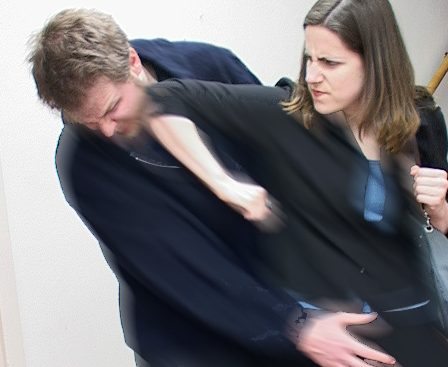
General Safety
- Create a safety plan.
- Listen to and act on your intuition. It’s better to be safe and risk a little embarrassment, than stay in an uncomfortable situation that may be unsafe.
- If you are in danger or being attacked and want to get help, yell “Call 911!” or give specific directions to onlookers; for example: “You! Get the police!” or “Walk me to the store on the corner, I’m being followed.”
- Have your keys ready when approaching your car or building.
- Vary your routine: drive or walk different routes every day. If you suspect that someone is following you, by foot or in a car, don’t go home (or they will know where you live). Go to a trusted neighbor or to a public place to call police, or go directly to the police station.
- Do not label keys with your name or any identification.
- Don’t talk about your social life or vacation plans where strangers can overhear you.
- Always carry enough change for a telephone call (and keep your cell phone battery charged).
In Your Home
- Have lights in all entrances.
- Have good locks on all doors and windows.
- Do not use your full name on your mailbox, answering machine or in the phone directory.
- Do not leave a schedule of your times away from home on your answering machine or on your door.
- If you live alone, do not let strangers know. Invent a roommate or big dog.
- Know which neighbors you can trust in an emergency.
- Check who is at the door before opening it, and do not open the door to an unexpected visitor.
- Don’t hide extra keys in easily accessible places. Criminals will find them.
- Ask for photo identification of all repair persons, etc. If you are still suspicious, call to verify employment.
- Never give personal information to telephone solicitors.
- Consider creating a “safe room” with a separate telephone line or cellular phone, and strong locks. If someone breaks in, you can retreat there (with children) and call for help.
- Do not let strangers into your home to use the phone. Offer to make the call for them.
On the Street
- Don’t hitchhike.
- Be very careful using outside ATMs at night or in unfamiliar surroundings.
- When walking, face the oncoming traffic. It will be harder for someone to pull you into a car and abduct you. You can also see cars coming in your lane.
- Tell someone where you’ll be and what time you’re supposed to return, or if you will be with someone you don’t know well.
- Don’t overload yourself with packages. If you must have your hands full, visualize how you would respond if approached, how you would get your hands free, etc.
- With the popularity of MP3 Players it would be unrealistic to tell people to not to wear headphones when outdoors. Therefore, know you must be extremely mindful of your surroundings when wearing headphones on the street. –When you voluntarily close off one of your senses, you must elevate all other senses to compensate. –Recognize when you reduce your hearing it puts you at a disadvantage and do so at your own risk.
- When reading in public, have 360 degrees of awareness and know how to tactically stand up if someone encroaches on your space.
Personal Safety Precautions
- If someone asks you for directions, and if you choose to reply, remain at least two arms lengths away.
- High heels and tight skirts are hard to run and fight in. Scarves, neckties and long necklaces are easy to grab. Modify your fashion style, or wear comfortable clothing when walking alone (change into dress clothes later), or think of how you would fight in your dress-up clothes (for example, kicking off your high heels or hiking up your skirt before starting to run or kick).
- Avoid being on the street alone if you are upset or under the influence of drugs or alcohol.
- When dropping someone off at home, make sure they are safely inside before driving away. Have them do the same for you.
On Public Transportation
- Beware of overheard conversations. Don’t tell anyone on the bus or a subway where you are going.
- Stay awake and alert.
- Have exact change ready.
- Try to sit near the driver.
- If you sense someone is following you when you get off, walk toward a populated area. Don’t walk directly home.
In a Car
- Check the inside and around your car before entering to ensure that no one is hiding there.
- Check your surroundings before getting out of your car.
- Don’t pick up hitchhikers.
- Keep doors locked and window rolled up so that someone can’t reach in with their hand.
- If a group of suspicious peopled approaches you when you are stopped at a red light at a deserted intersection, run the light if your intuition tells you that the situation could get dangerous.
- Don’t let the gas indicator fall below ¼ of a tank.
- Plan your route and check a map before you start out.
- Park in well-lit, heavily traveled areas if possible. Try not to park next to a van, as you can be pulled in through the sliding door.
- Don’t leave valuables in plain sight inside your car. –Give only the ignition key to a parking attendant.
- If you see an accident or stranded motorist, report it from the nearest telephone instead of stopping.
- Carry in your car: flashlight, flares, fix-a-flat, maps, comfortable warm clothing, first aid kit, empty gas can, white cloth to tie to antenna to signal distress, cellular phone.
- Learn basic auto maintenance.
Defense against Dogs
- When confronted by a threatening dog our impulse is often to turn and run. This is the worst response, since movement triggers the chase instinct in dogs.
- Stand very still and try to be calm. –Don’t scream at the dog and run. –Be aware of where the dog is. Look in its general direction, but don’t stare into its eyes. This is considered an aggressive challenge.
- Let the dog sniff you.
- In a low voice say, “No! Go home!” –Stay still until the dog leaves.
- Back away slowly until it’s out of sight.
- If a dog does attack, try to “feed” it your jacket, bike equipment, briefcase, backpack, purse, etc. -anything that you can get between you and the dog to distract it while you back slowly away towards safety.
- Invest in an “Ultrasonic Dog Repeller” and effectively stop a dog’s approach at up to 20 ft. in a humane way.
- If you need to go on the offensive, a dog’s weak point is its hips. Do your best to kick at that target to debilitate the dog’s attack. Also, its ribs have less strength when impacted from the side. Trying to hit the nose you’re liable to send your hand straight into its jaws, and if you do connect you’re liable to make the animal more ferocious.
- If you are knocked down or fall, curl into a ball and keep your hands over your ears, face, and neck. Try not to scream or roll around.
Portions of “Tips for Personal Safety” provided by Iowa State University Public Safety. Permission to reprint given by Lisa Goeres, Program Assistant for Iowa State University Public Safety Deptartment’s website.